Local Services
LCSWMA shares how to dispose of household hazardous waste
Learn what is considered household hazardous waste and how to dispose of it safely from the LCSWMA team.
Summer is a great times to tackle household projects—from cleaning out a junk drawer, organizing the garage, or sorting through items under the kitchen sink. As you tidy up, you may find products that are considered household hazardous waste (or HHW). Knowing what these items are, and how to get rid of them safely, helps protect your family, your community, and the environment.
What is HHW?
Household hazardous waste includes many leftover, unused, or expired products found around the home. These items may have ingredients that can be toxic, catch fire, react with other materials, or damage surfaces and skin. A good rule of thumb is to look for labels with words like “Danger,” “Poison,” “Warning,” or “Caution.”
If you see those words, the item may need special handling. HHW should never be thrown in the trash, dumped on the ground, or poured down a drain. Doing so can release fumes, start fires, endanger wildlife, and cause harm to you and others. LCSWMA accepts HHW free of charge from Lancaster County residents at its facility located at 1299 Harrisburg Pike in Lancaster.

Household Chemicals
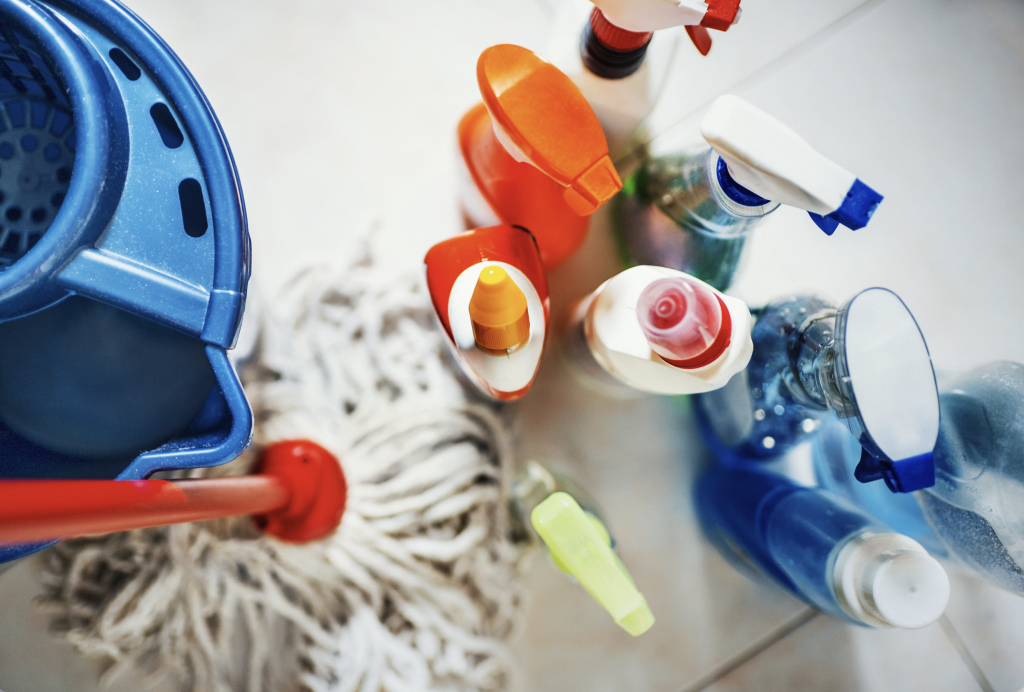
Common household chemicals can include cleaners, adhesives, solvents, pool chemicals, pesticides, herbicides, fertilizers, floor and furniture polish, and similar products used around the home, garage, or yard. For these products, avoid pouring liquids down the drain or placing containers in the trash. Keep each item in its original container whenever possible, and make sure the lid is secure for safe delivery to LCSWMA’s HHW Facility.
Batteries
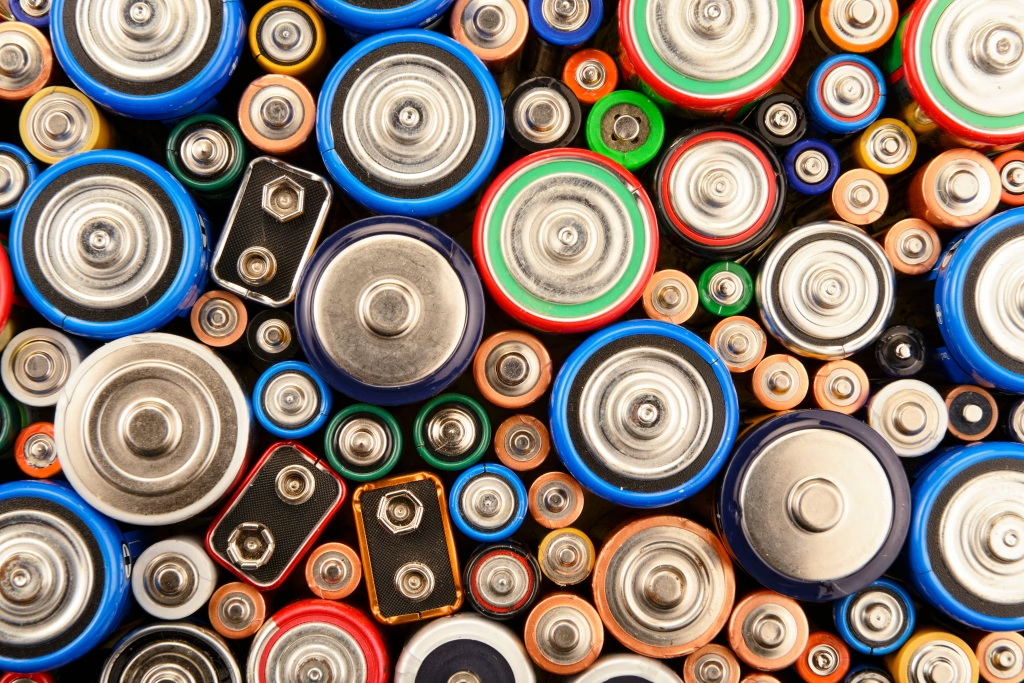
Alkaline batteries are single-use and can be found in household devices like remotes or flashlights. Rechargeable batteries (like lithium-ion) provide more powerful and long-lasting energy but can spark or explode if damaged or overcharged. Never throw batteries in the trash. Store used batteries in a non-metal container, such as a plastic bag, cardboard box, or glass jar. Don’t store batteries with metal objects like keys, coins, or tools. For rechargeable batteries, cover the battery terminals with non-conductive tape, such as electrical or vinyl tape, or place each battery in its own small plastic bag and store them somewhere cool and dry at a stable temperature (between 60 and 70 degrees Fahrenheit) until you are ready to deliver them.
Electronic or E-Waste
Electronic waste, or e-waste, includes items like televisions, computers, printers, cellphones, and other devices with cords, batteries, or circuit boards. These items often contain materials that can be harmful if thrown in the trash. However, many of these materials can also be recovered and recycled into new products when handled properly. E-waste should never be placed in your curbside trash or recycling. Instead, keep devices intact and store them in a safe, dry place until you’re ready to dispose of them properly.
Not sure if something counts as HHW? Look it up using the new Waste Search Engine at LCSWMA.org!
LCSWMA’s HHW Facility is located at 1299 Harrisburg Pike in Lancaster, open 7AM–4PM from Monday to Friday and 7AM–11AM on Saturdays.
Want to discover more local? Follow Fig on Facebook and Instagram for inspiration.